
Better Factory Solutions
4 July 2026
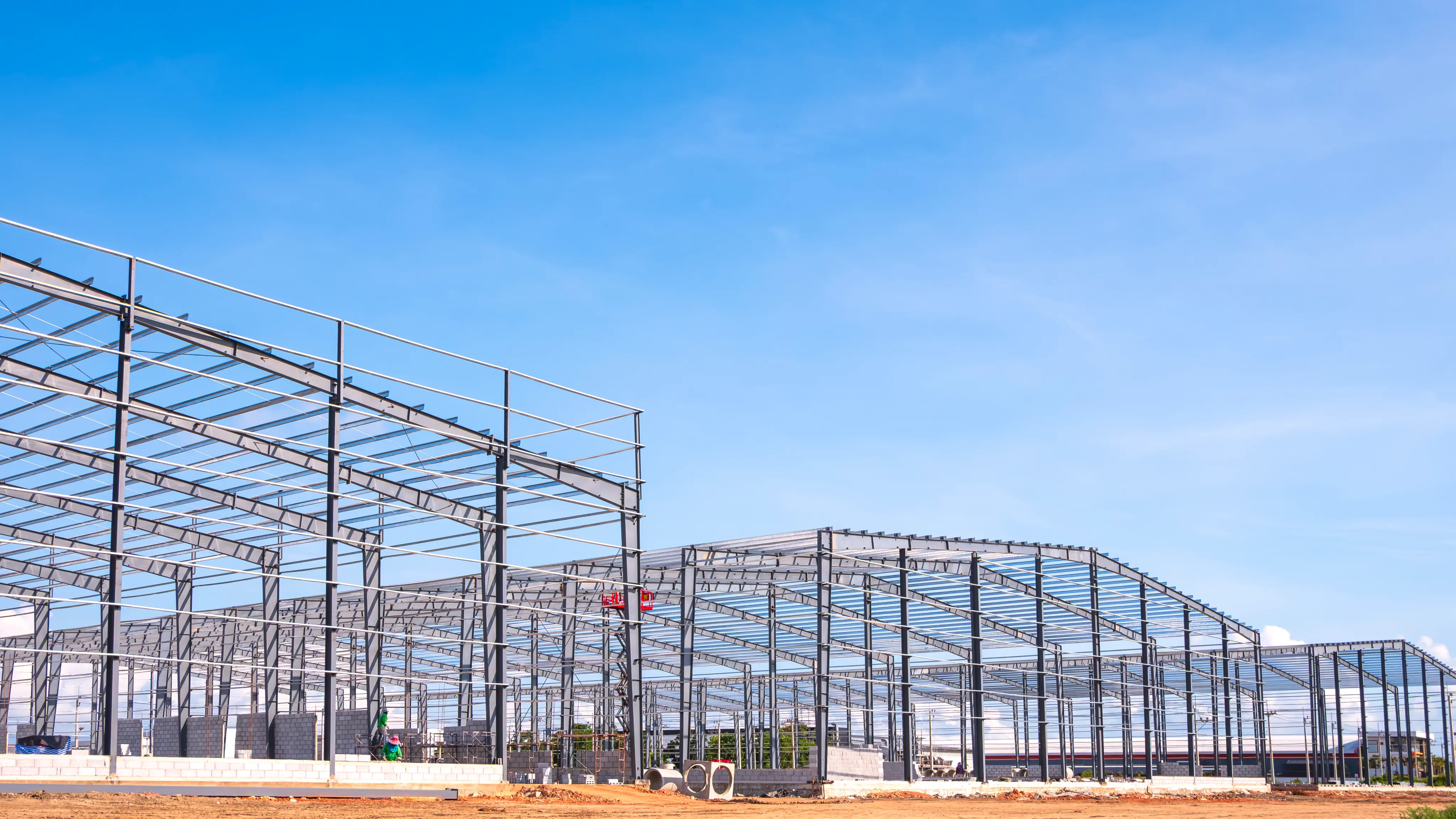

When planning a factory, warehouse, or industrial shed, one of the most common questions buyers ask is how to calculate PEB construction cost correctly. Most contractors provide pricing in two different formats: PEB structure cost per kg and PEB structure cost per sq ft.
At first glance, both methods may look similar, but in reality, they represent completely different ways of estimating project cost. Understanding the difference is very important because it directly affects how you evaluate PEB building cost, compare quotations, and choose the right PEB building contractors.
Many industrial buyers make incorrect decisions simply because they do not understand which pricing method reflects actual project value.
The PEB structure cost per kg method is based on the actual weight of steel used in the building. In this method, the contractor calculates the total steel consumption in kilograms and multiplies it by a per kg rate.
This approach is more engineering-driven because it is directly linked to the structural design.
Steel weight depends on multiple factors such as building span, height, wind load, seismic conditions, crane requirements, and future expansion planning. Heavier structures generally indicate stronger design assumptions.
This method is commonly used by experienced PEB structure manufacturers and engineering-focused companies because it reflects real material consumption and design efficiency.
However, it is not always easy for a non-technical buyer to evaluate because steel weight alone does not show the complete project scope.
The PEB structure cost per sq ft method is a simpler pricing model. In this approach, the total project cost is divided by the built-up area of the structure.
This method is widely used for quick budgeting and initial cost estimation because it is easier for factory owners to understand.
Many PEB building contractors prefer this method when discussing early-stage project planning because it gives a fast, approximate idea of the investment required.
However, this method can sometimes be misleading because it does not account for variations in structural design, steel weight, or scope differences.
Two buildings with the same square footage can have completely different structural requirements, which means the cost per sq ft alone cannot define true construction value.
The biggest reason for variation between PEB structure cost per kg and PEB structure cost per sq ft is structural engineering.
A building with a higher wind load, longer span, or crane requirement will naturally require more steel. This increases the cost per kg but may not significantly change the cost per sq ft.
On the other hand, a simpler structure with fewer design requirements may show lower cost per sq ft, but may not be suitable for heavy industrial use.
This is why relying on only one method can lead to incorrect comparisons between different PEB contractor quotations.
From a technical perspective, the PEB structure cost per kg is more accurate because it is directly linked to structural design and material usage.
It reflects:
Actual steel consumption
Engineering load requirements
Structural safety factor
Fabrication quantity
This is why most engineering-led PEB building contractors prefer kg-based estimation for detailed costing.
However, from a business perspective, the PEB structure cost per sq ft is easier for quick decision-making and budget planning, especially for non-technical buyers.
The most reliable approach is not choosing one method over the other but understanding both together.
A proper PEB construction cost evaluation should always consider:
Steel weight (kg basis)
Built-up area (sq ft basis)
Structural design requirements
Scope of work
Material specifications
One of the most common mistakes in the industry is selecting a contractor based only on lower PEB building cost per sq ft.
A lower sq ft rate often means:
Reduced steel weight
Simplified structural design
Lower safety factor
Exclusion of key scope items
This may look attractive initially, but can create long-term issues in performance, maintenance, and expansion capability.
Established companies like Everest, Pennar, and Kirby rarely compete only on sq ft pricing because industrial structures require engineering precision rather than simplified cost comparison.
This is where RF Infra focuses differently ensuring that every PEB structure design is based on actual engineering requirements rather than only cost reduction.
The PEB structure cost per kg method is closer to real engineering logic because steel is the primary structural material.
When the design load increases, the steel requirement increases. When the span increases, the steel requirement increases. When the crane load is added, the steel requirement increases.
This makes kg-based pricing more transparent for technical evaluation.
However, even this method should not be evaluated in isolation. Two contractors may show similar steel weight but differ in fabrication quality, welding standards, coating system, and erection execution.
At RF Infra, we do not believe in quoting buildings only on a square foot or per kg basis.
Instead, our PEB building cost evaluation is based on complete engineering and execution planning, including:
Structural design accuracy
Load-based steel optimization
Material quality standards
Fabrication control
Site execution planning
Future expansion capability
This approach ensures that clients get a realistic cost structure instead of an oversimplified pricing model.
Unlike standard PEB building contractors who may focus only on reducing initial cost, RF Infra focuses on long-term structural performance and lifecycle value.
If you are comparing multiple PEB contractor quotations, the correct method is not choosing between kg or sq ft alone.
Instead, you should evaluate:
Steel weight per square meter
Design assumptions and load criteria
Scope of work inclusions
Material specifications
Execution responsibility
Long-term durability
Only when these factors are combined can you understand the real PEB construction cost of your project.
Both PEB structure cost per kg and PEB structure cost per sq ft are useful pricing methods, but neither is complete on its own.
Kg-based pricing is more technically accurate because it reflects structural engineering reality, while sq ft pricing is easier for quick budgeting and comparison.
For industrial decision-making, the best approach is to use both methods together, along with detailed scope analysis.
A properly evaluated PEB building cost ensures better structural safety, optimized investment, and long-term performance of your factory or warehouse.
Choosing the right PEB building contractors is not about finding the lowest price; it is about selecting the most reliable engineering solution for your industrial growth.
What is the PEB structure cost per kg?
It is a pricing method where the total steel weight is multiplied by a per kg rate based on structural design and material usage.
What is the PEB structure cost per sq ft?
It is a simplified method where the total project cost is divided by the built-up area to estimate the cost per square foot.
Which is more accurate for PEB construction cost?
Cost per kg is more accurate because it reflects actual steel consumption and structural design requirements.
Why do PEB quotations differ between contractors?
They differ due to variations in steel weight, design assumptions, material quality, and scope of work.
Is the cost per sq ft enough to evaluate PEB buildings?
No, it should always be combined with steel weight, design loads, and scope details for accurate evaluation.
